In summer your training conditions change, and so should the way you eat. Not just because of the heat itself, but because when temperatures rise your appetite drops, digestion slows down and the desire for heavy meals fades fast. In this article we look at how to set up your nutrition when you train in the heat — and we finish with three refreshing recipes.
Why digestion slows down when it’s hot
During exercise your body redirects part of the blood flow away from the gut and toward the muscles and skin, to sustain the effort and dissipate heat through sweat (the mechanism is called thermoregulation). A systematic review published in Alimentary Pharmacology & Therapeutics (Costa et al., 2017) estimates that intestinal blood flow can drop by up to 80% during intense exercise, and this reduction is even more pronounced in the heat. Less blood to the digestive system means slower digestion, which copes worse with heavy, fatty or fibre-rich meals: it’s one of the reasons certain dishes you digest without any trouble in winter sit heavy on your stomach in summer.
The practical takeaway is simple: before training, go for a light meal or snack based on simple carbohydrates and low in fat and fibre, to be eaten 1-2 hours before you set off. After training the story changes: it’s the moment when your body is most receptive, and it’s worth getting there with carbohydrates (to replenish glycogen stores, the sugar stored in your muscles) and protein (for muscle repair), ideally within about an hour of finishing the session.
Frequent, light meals beat heavy ones
In the heat your appetite drops and hunger shows up differently than it does the rest of the year: often you don’t feel like a full meal with a first course, main, side and dessert, and that’s perfectly fine. It’s better to break the day up into smaller, more frequent meals — even 5-6 occasions, counting snacks — rather than a few big meals that leave you feeling heavy. A piece of fruit, some bread with fresh cheese, a yogurt with cereal or a handful of nuts are snacks that keep your metabolism active without weighing down your digestion.
It’s also worth avoiding dressings and cooking methods that weigh you down — fried food, elaborate sauces, too much salt or too much butter — and leaning toward one-plate meals, simple but balanced, that combine carbohydrates, protein and vegetables on a single plate instead of stacking up several courses.
Seasonal fruit and vegetables: your summer allies
Summer is the best time to increase the share of fruit and vegetables in your diet: aim for at least 3 servings of vegetables and 3 pieces of fruit a day, ideally in season. As well as being light and refreshing, summer fruit and vegetables — watermelon, melon, peaches, tomatoes, cucumbers, courgettes — are rich in water, vitamins and minerals, and the pigments that give them their colour (orange, red, green, purple) often correspond to antioxidant substances such as vitamins and polyphenols (plant compounds that protect your cells). The more varied the colours on your plate, the more varied the micronutrients you take in. A simple, effective pairing is fresh fruit with plain yogurt with no added sugar, great both at breakfast and as a snack.
3 recipes to train (well) when it’s hot
1. Breakfast — Summer overnight porridge
Ingredients: 50 g of oats, 15 g of chia seeds, 150 ml of milk (plant-based or dairy), fresh berries, a pinch of cinnamon, a handful of almonds or walnuts.
Preparation: the evening before, mix the oats, chia and milk in a jar, cover and leave to rest in the fridge overnight. In the morning add the fresh fruit, the cinnamon and the nuts.
Why it works: it’s prepared the night before, so zero effort in the morning when it’s already hot early on. The carbohydrates in the oats give you the energy for training, while the chia and nuts add good fats without weighing you down.
2. Snack — Banana and mint smoothie
Ingredients: 1 banana, about ten fresh mint leaves, 180 g of plain yogurt, 150 ml of water or milk, a few ice cubes.
Preparation: blend all the ingredients until smooth.
Why it works: the banana is one of the most convenient sources of potassium and carbohydrates for anyone who trains, the mint makes it fresh and pleasant even on the hottest days, and the liquid consistency makes it a light snack before or after training.
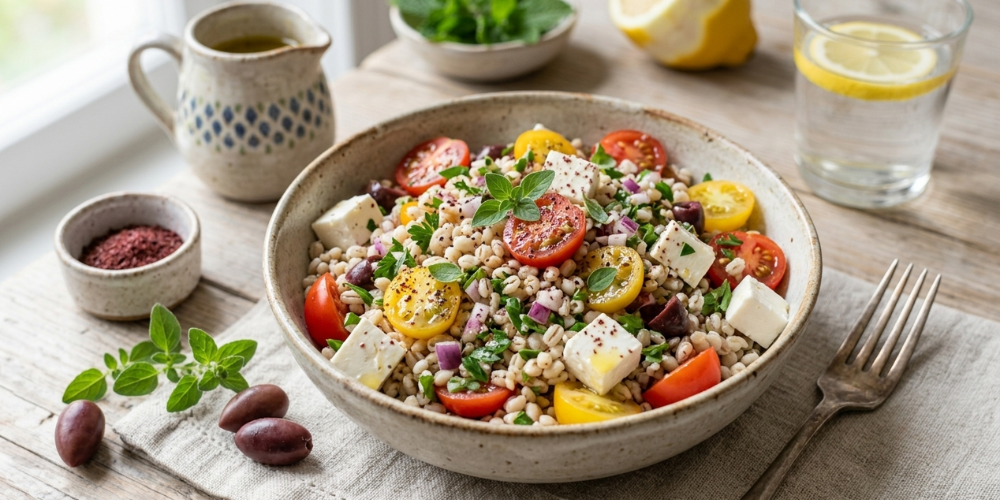
3. Cool dish — Cold barley (or spelt) salad with feta and cherry tomatoes
Ingredients: 150 g of pearl barley or spelt, one cucumber diced, cherry tomatoes cut in half, crumbled feta, pitted black olives, fresh mint leaves, a drizzle of olive oil and lemon juice.
Preparation: cook the barley (or spelt) in salted water, drain it and let it cool. Add the other ingredients, dress with oil and lemon and mix well. It keeps in the fridge and tastes just as good the next day.
Why it works: it’s a one-plate meal that brings together carbohydrates (barley or spelt), protein and good fats (feta, olives) and fresh seasonal vegetables — perfect as a main meal on hot days, when a traditional multi-course meal would be too much. For a more protein-rich post-workout snack, you can add tuna or chickpeas.
In summary
When it’s hot the physiology of digestion changes, and your nutrition should adapt accordingly: lighter, more frequent meals, less elaborate, with more seasonal fruit and vegetables, and the right attention to carbohydrates and protein in the moments before and after training. If you want to dig deeper into the other effects of heat on performance, you’ll find more food for thought in our article on heat and performance decline.
Sources
Costa RJS, Snipe RMJ, Kitic CM, Gibson PR (2017). Exercise-induced gastrointestinal syndrome: implications for health and intestinal disease. Alimentary Pharmacology & Therapeutics, 46(3), 246–265.
Burke LM, Hawley JA, Wong SHS, Jeukendrup AE (2011). Carbohydrates for training and competition. Journal of Sports Sciences, 29(sup1), S17–S27.